ConnectUs Youth Spotlight EP 20 - Nathan Hartadinata: Putting Passion on Paper to Understand Life

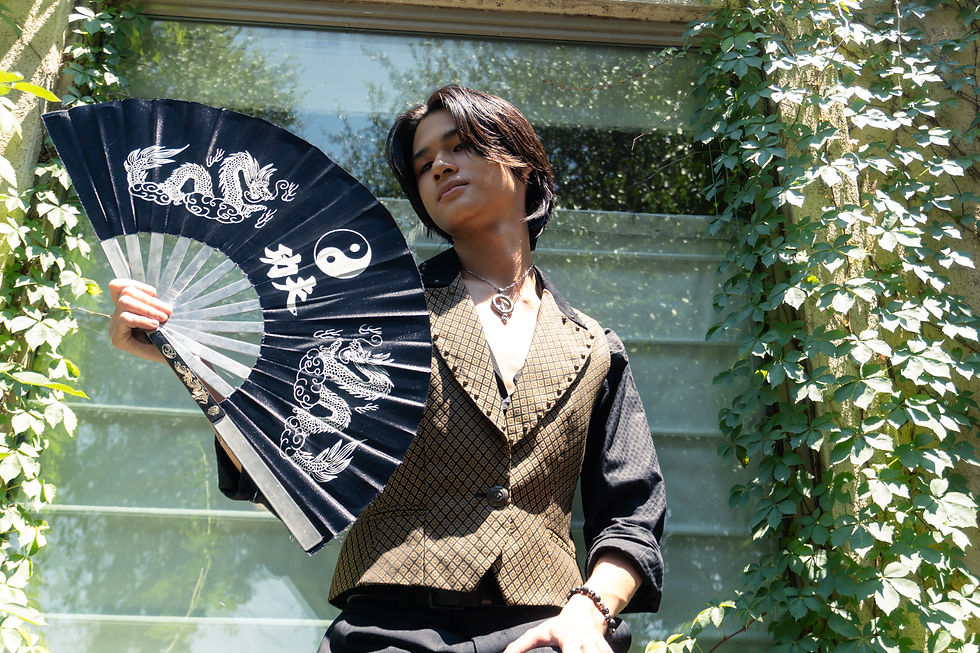
Nathan is a junior in Catholic high school who is an aspiring writer based in Austin, Texas. Born as a first gen Indonesian-American to Chindo parents, he jokes about how his goal of being a writer would be a “disappointment” compared to taking up a profession under STEM, in truth this identity is more than just a stereotype. He elaborates on how his identity and life experiences let him discover his passion for writing, and how others can do the same.
In a survey asking Korean and Chinese Americans if they associated more with their identity, the culture of their heritage or American culture, they answered neither. When asked to elaborate on the experience of being an Indonesian American and how it contributes to his identity and whether he would answer the same Nathan responded,
“Honestly, when I was younger, I tried to keep Indonesian culture, because that’s what I was raised in. But I went to a school that was majority white, and it was hard not to get pointed out… The way I talked was different, the way I sounded was different, the way ate was different… It was a real wake-up call that you can’t fully embrace a culture when you weren’t raised… in the place it comes from. So in my mind, I had to mix the American culture I was raised in with my Indonesian heritage.”
He elaborates on his discovery of his identity in this sense to really only formulate after he wrote his work “Love, Raja”, an epistolary narrative following Raja, an Indonesian boy who writes home to his mother about his conflicts with trying to live in America with his foster parents and losing his grip on his heritage. This story serves as the first instance that Nathan uses his own works of fiction to explore his own personal life.
The Inspiration Behind What Makes Us Human
The collection of works Nathan has written are all a culmination of his short story collection What Makes Us Human, with few of the stories that compose this collection being published online or soon to be published by literary magazines in Spring. When asked where the origin of the title came from, Nathan cited one of his favorite books: No Longer Human, by Osamu Dazai.

No Longer Human by Osamu Dazai is a semi-autobiographical work following the life of Oba Yozo: a man who lives in post-WWII Japan, who conceived himself to not be human for all his major flaws such as addiction and suicide. In the end, these flaws have become what made him one of the most human characters Nathan has come upon.
The work inspired Nathan to write about in all his stories what he calls taboo about human life that needs to be exposed, deeming, “It’s an ugly truth, but it’s a human truth.” This exploration of what can’t be talked about without an air of awkwardness or shame allows him to understand and express himself in a way that makes sense to him and hopefully others.
“‘To write inspiring work, you must be inspired first.’ I’d never heard that quote in my life until then, and honestly, it’s true. It’s true… A STEM major wouldn’t go into STEM unless something attracted them… These things in our lives inspire us. For me, it was both my own personal life and the great works I remember reading since I was little.”
A foundational origin of what Nathan wanted to produce as a writer didn’t just come from one book; it came from many. He claimed to have a stack of books behind him that he sets aside from the rest as his favorite books and the ones that inspired him. When he was younger, he read Geronimo Stilton books on top of western and eastern literary masterpieces like Dante’s Inferno and Frankenstein, or The Vegetarian and Journey to the West.
When asked about how these novels from a wide array of cultures and places inspired his writing style—and how they differ and correlate—he offered his insight on the extreme dramatization of every plot point within western literature, compared to the subtleties of eastern literature in its dire moments. Yet, he says no matter the language or the place of origin, any work has the following aspect: passion always shines through.
What Makes Us Human: A Composition of Passion and Exploration

Could a literary work from a high schooler really have passion? Nathan certainly hopes so. He expresses how when he writes he thinks it’s terrible, but he could never bring himself to erase it. The way he describes the writing processing was finding a theme, or something he wanted to explore, prior to developing a plot. He describes the theme as the “soul” in a work and without a theme, a plot that is made only to write within a genre lacks “soul.”
“I want to talk about depression. I want to talk about anxiety. I want to talk about what makes beliefs so substantial in a human’s life that they can devolve into a personality trait. I want to talk about how hard it is to achieve dreams, especially when you’re given ample opportunity to fail. I want to talk about heartbreak. I want to talk about pride. And I want to talk about the flaws in my own religion…”
But what happens when he feels stuck, or better known as writer’s block? Well Nathan described two instances in which he expressed how he only encountered such when he felt like he could express a theme well as he could not understand the theme and its meaning to him yet. His first ever work “When Love Turns Sober” was left on hold for five months as Nathan continued to discern the importance of responsibility and pleasure in love. In other works such as “The Will of the Gods”, he wanted to leave the ending of the main character ambiguous to let the reader decide for themself if his actions were justified.
Advice on Finding Passion
When asked how he found his odd passion for writing Nathan replied that his life is his inspiration but not the origins for it. He struggled through depression, anxiety, and suicidal thoughts for eight years and wanted to be a psychologist, yet he never felt satisfied with the idea; he had many life experiences within the lines of STEM, but the more he thought about it he felt unsatisfied. Ultimately, toward the end of the podcast, he emphasizes the idea that passion can only be found through a succint yet profound process:
“When you close your eyes and think of what you want to do, does that thing you chase make you feel accomplished? That is passion.”
Just as he leaves the ending ambiguous on “The Will of the Gods," the ultimate takeaway for this podcast is up to the listeners; whatever it is - whether it be a pursuit of meaning through poetry, lab or atheltics, he urges us to follow our primary identities: that is, being What Makes us Human.

Connect With Nathan and his works:
Nathan's writing Insta: @nahas_collection
His Email: nathanhart2020@gmail.com


Comments