ConnectUs Youth Spotlight EP 9— (Mohammad Shehadeh: Translational Justice and building a modern study tool for dead classical languages from Egypt & U.K)

At fifteen, Mohammad Shehadeh is in year 10 at a school in Manchester, and his interests run considerably deeper than most of his peers. He speaks English and Arabic, is learning Latin and Ancient Greek, has given a TEDx talk, published a psycholinguistics research paper, built an AI-powered study website for classics students, and has mailed letters to 14 world leaders this year and gotten responses.

The Thinker
Mohammad describes himself in one word: thinker.
It is not a throwaway answer. He means it in a specific way. A lot of what we do, he says, comes down to thinking, making decisions, and interpreting things. Thinking is what makes us human. It is also the lens through which he approaches everything, from ancient philosophy to the way phones have quietly changed how people write.
His interest in ancient languages started during COVID, when he came across a YouTube cover of a song performed in Latin and was immediately hooked. He is now studying Latin and Ancient Greek alongside his regular coursework, working toward GCSEs and A-levels in classics.
For Woosung, the podcast host, Latin had barely registered on his radar. He had been living in South Korea at the time, where encounters with Latin are essentially nonexistent. He eventually attended a Catholic school in the States and realized how deeply Latin had seeped into everyday English, particularly in medicine and law.
Why Dead Languages Are Not Actually Dead
One of the obvious questions about Mohammad's interests is what the point is. Why spend real time and energy on a language no one has spoken in centuries?
His answer is direct: the value is what you make of it.
"If you decide that there is no value in learning Latin, ancient Greek, or those languages, there won't be any value for you. But if you decide to use them as tools to understand the human mind — a lot of what we do in Latin is reading ancient literature that explores the mind, humans in general, how we behave — you can reflect those tools back into your work."
He talks about the ancient Greek philosophers not as relics, but as people. Socrates and Aristotle, he points out, were humans too. They just did not have phones. The thinking they did translates across generations.
He particularly admires Socrates, though not without reservation. Socrates believed writing was harmful because it could not change. Mohammad disagrees with that. He thinks writing is deeply important, and he sees having that kind of disagreement with a philosopher from two thousand years ago as part of why they are worth studying.
Research Paper: How Autocorrect Erased a Dialect
Mohammad's psycholinguistics research paper looked at how Singlish, the creole spoken in Singapore, changed as phone technology evolved.
The question he started with was: how have text messages changed the way people write in Singapore? In the early 2000s, Singlish texters were using short acronyms and dialect-specific phrasing. As phones moved from physical keyboards to touchscreens, those patterns started to disappear and texts began to look more like standard English.
The culprit he identified was autocorrect and predictive typing. Because those systems are built on standard English, they work against dialects. The way people actually speak culturally gets flattened out.
But there is an interesting wrinkle. Around 2015, he found a resurgence of shorter messages and informal phrasing in the data. His interpretation is that social media may be bringing some of that cultural expression back.
TEDx: When Translation Loses the Culture
Mohammad gave a TEDx talk about translational justice: the idea that translation is never neutral.
His entry point is personal. Moving from an Arabic-speaking environment to an English-speaking one, he found himself leaving certain words behind because no direct equivalents exist in English. When you move a text from one language to another, you do not just move words. You shift meanings, interpretations, and cultural weight.
He shared an example he learned about from a lawyer: an asylum seeker, an interpreter, and a religious cultural context that the interpreter could not accurately convey. The interpreter was reprimanded, not because he did not know the language, but because he did not carry the cultural knowledge that went with it. Language and culture, in Mohammad's view, are inseparable.

Mohammad's TED talk on Translational Justice:
Lexicon: Building the Study Tool He Needed

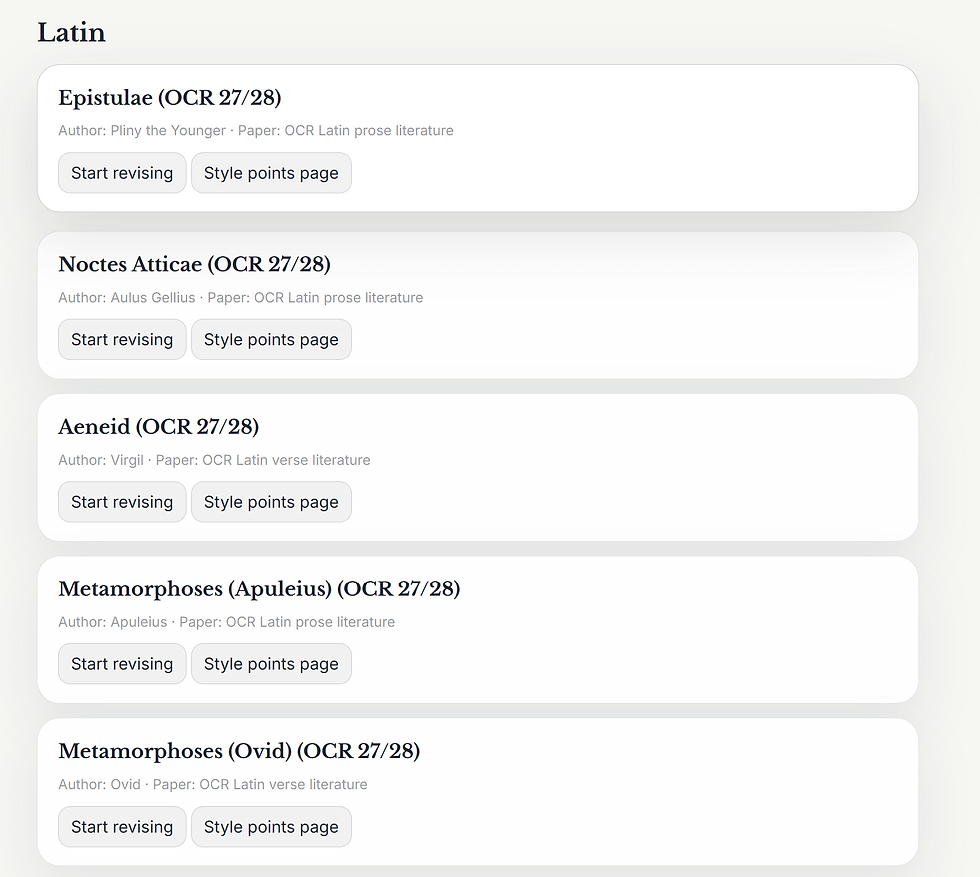
For his GCSE and A-level classics courses, Mohammad noticed a specific gap: students in his class were struggling to understand the literature they were being tested on, and there was almost no existing material for the specific texts they were studying.
So he built Lexicon, a website that uses AI to teach students the texts, quiz them, and help them memorize the material. He built it using Claude and Claude Code, specifically because he wanted to move quickly and get it into the hands of students who needed it.
Despite having been tinkering with coding and electronics since he was eight, he chose the AI-assisted build route deliberately. His reasoning on what it actually takes to build something with AI is worth sitting with: you do not need to understand every line of code, but you do need to understand what you are trying to build. The knowledge of what to ask for is the thing that matters. The code itself can come from AI.
Project 52: Letters to the People Running the World
Every week this year, Mohammad has mailed a physical letter to a world leader. That is where the name comes from: 52 letters, one a week.
He has sent 14 so far. He has heard back from Buckingham Palace, the Prime Minister of Ireland, and the European Commission.
He asked two questions to each leader: "What do you believe is the most important challenge the world will face in the next 20–30 years, and what gives you hope for the future?"
The EU Commission's response surprised him. The biggest threat they named was the threat to democracy. Given everything happening globally, they said, the EU's priority is protecting itself and its democratic institutions. What gives them hope? Young people, and the programs they are building to accelerate youth participation in STEM and secure the Union's future.

His Advice
When asked what he would tell a student sitting on a big idea, Mohammad's answer was to take advantage of the new artificial intelligence, but in a careful way.
His reasoning follows the same thread he returned to throughout the conversation: build your foundations first, then use the tools. For young people developing a skill, whether writing, coding, or anything else, he thinks doing it yourself matters. Once you have that grounding, AI becomes genuinely powerful. Without it, you are just generating output you cannot evaluate.
His broader philosophy, borrowed from Plato is that truth sometimes arrives with force. His favorite word from the ancient world is βία, (Bia) Greek for force or violence. He references the Allegory of the Cave, in which the prisoner is dragged up into the light rather than led gently. That element of discomfort, he thinks, is part of what it feels like to encounter reality. He has been trying to apply that same willingness to examine everything, including the things he already thinks he believes.

What Is Next
Mohammad is continuing his classics studies at his school in manchester, developing Lexicon further, and keeping up with Project 52 through the rest of the year.
We are glad he joined us, and it was genuinely an interesting and insight conversation!
Thanks Mohammad for joining ConnectUs Youth Spotlight, and tune in to the full episode of our podcast, available on Spotify and across our social channels.
Links:
Project 52: https://project52letters.netlify.app
Lexicon Project: https://the-lexicon-project.com
Mohammad's LinkedIn: https://www.linkedin.com/in/mo-shehadeh/
Spotify Episode:
Image citation:
Gill, N.S. “The Allegory of the Cave From the Republic of Plato.” ThoughtCo, 1 May 2025, https://www.thoughtco.com/the-allegory-of-the-cave-12033



Comments